The Filmoteca de Catalunya: conservation and dissemination of film culture

Figura 1. Seu de la Filmoteca de Catalunya a Barcelona

La Filmoteca de Catalunya té com a missió principal recuperar, conservar, investigar i difondre les pel·lícules i les obres audiovisuals, així com els materials, documents, equips i qualsevol altre element que sigui d’interès per a l’estudi del cinema i l’audiovisual en general, i del cinema català en particular. En essència, conservar i difondre la cultura cinematogràfica. Es descriuen les àrees que contribueixen a aquesta fita i es reflexiona sobre la necessitat d’oferir un servei fiable i professional a la ciutadania, les institucions i les empreses amb interessos en el sector cinematogràfic.

The digital restoration of film

Aquest article tracta sobre la conservació i la restauració de pel·lícules amb tecnologies digitals. Les pel·lícules, com a expressió de la memòria col·lectiva, formen part del patrimoni comú de la humanitat, i mereixen ser preservades i difoses. Per això, la qüestió de la preservació dels materials cinematogràfics està guanyant pes, sobretot si tenim en compte la fragilitat estructural i la curta durada de l’estoc de pel·lícules.

L’estat actual del mitjà audiovisual és de transició: a poc a poc l’element analògic i fotoquímic és substituït pel sistema digital. I això influeix molt en les pràctiques de producció i distribució del cinema, i també en els debats teòrics sobre el mitjà: els criteris d’arxivament i els processos de restauració no són una excepció a aquesta lògica.

Use, acceptance and expectations for the ebook in a research library

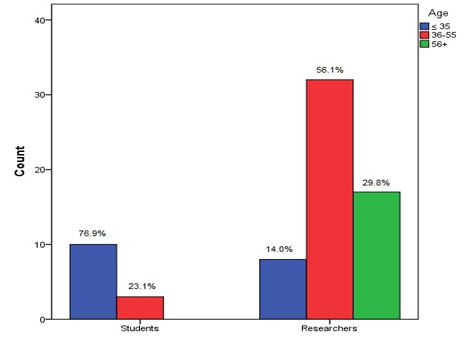
Response distribution according to academic status and age

Objectives: This work attempts to establish the use and attitudes that users of the Library of the Institute of Physical-Chemistry ‘Rocasolano’ (Biqfr) of the Spanish National Research Council (CSIC) have with regard to scientific and technical ebooks. Thereby a better understanding will be obtained of the behavioural patterns towards this electronic resource which is in its early stages of implementation within the research environment.

Methods: An online survey was carried out of the users mentioned through the library blog, obtaining a sample of seventy users of which 63% use Biqfr ebooks.

Results: In the main, ebooks are used for the purpose of work and research, and the PC is the device most used to read them. Despite this, the attitude of the users towards ebooks is considered conservative, though at the same time optimistic, as they consider them as a useful tool when searching for information.

Digital education and responsible behaviour: the gold standards for improving quality of medical and health-related information on the Internet

Objectives: The aim of this article is to present the state of the art in the quality of health information on the Internet; to identify who the leading actors are and which the situations of the new information and communication scenario where technologies, users and information converge are; as well as pointing out the ways which contribute to the improvement of both the quality of health and medical online information and users’ information literacy skills.

Methods: Literature review and analysis of the current context of information and communication regarding the quality of health and medical information on the Internet.

Results: Immersed in the so-called network society, we have identified the protagonists of the new information and communication scenario, the matters they share, and the recurrent problem resulting from the introduction of new technologies within their relationships. Health is an issue of general interest, and health and medical information is one of the most requested topics online. New technologies have led users to be more proactive in their personal health care, and social web has moved into a leadership position in the network. Users with different profiles share affinities and values ​​in a place where the quality of information becomes the cornerstone of the framework composed by provider-user-information. The gold-standard treatments for improving the quality of health and medical information on the Internet, as well as users’ literacy skills, are the responsible behaviour of all actors and the digital education.